
Match the environment
Ambient benches, refrigerators, −20 °C freezers, −80 °C chests, and liquid-nitrogen storage impose different stresses on film, adhesive, and print.
Temperature guideIndependent educational resource
Labeltaglab explains how laboratory labels behave on tubes, vials, slides, and other containers. The guides cover temperature, chemicals, sterilization, print methods, barcodes, and RFID in plain language.
Sample identity is only as durable as the mark on the container. A missing, smeared, or unreadable label can break a chain of custody, stall a freezer inventory, or force a specimen to be discarded. Labeltaglab exists so readers can reason about materials, adhesives, print, and environment without treating a catalog page as a specification.
The resource is informational. It does not sell labels, recommend brands as if they were equivalent, take orders, or provide laboratory, medical, consulting, or certification services. Labeltaglab is an independent educational resource. It is not owned, operated, sponsored, or endorsed by LabTAG or GA International.
Ambient benches, refrigerators, −20 °C freezers, −80 °C chests, and liquid-nitrogen storage impose different stresses on film, adhesive, and print.
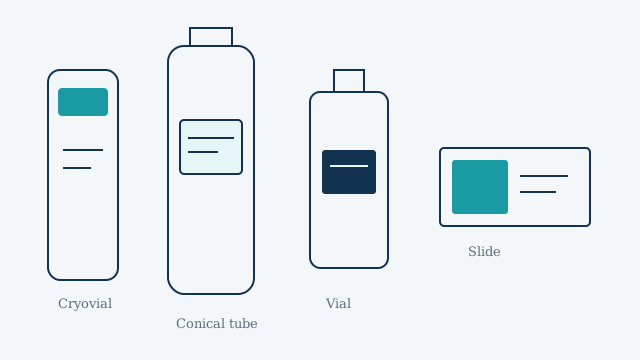
Temperature guideCurved tubes, frosted slides, boxes, and plates each limit label size, wrap, and the direction a scanner can see a code.
Container guideSolvents, disinfectants, and moist-heat sterilization can attack ink or lift edges even when a label looks fine at room temperature.
Chemical resistanceWork from the constraint that fails first. If vials enter liquid nitrogen, start with cryogenic labels. If the issue is alcohol wipes or xylene, start with chemical-resistant labels. If codes will not scan from a rack, start with barcode basics and barcode readability in cold storage.
Then compare face stock and adhesive roles and the print method. Direct thermal, thermal transfer, and office printers are not interchangeable for every laboratory job.
There are no product listings, prices, carts, quote forms, or “request a sample” workflows. There is no patient or specimen advice, no protocol writing, and no claim that a label type is validated for a specific assay or accreditation program. Readers remain responsible for checking manufacturer data sheets, running their own application tests, and following the rules of their institution.
Labeltaglab is an independent educational resource. It is not owned, operated, sponsored, or endorsed by LabTAG or GA International. Third-party manufacturers, including LabTAG, may be mentioned only as examples of companies that publish labeling information. Mention is not a partnership, sponsorship, or endorsement.
For editorial limits see the editorial policy. For data practices see the privacy policy. To report a citation problem, use the contact form or write to [email protected].
Laboratories lose identity in small, repeatable ways. A wrap is two millimetres short. A tube is labeled while still wet from an ice bucket. A direct-thermal image looks perfect on Monday and is charcoal after an autoclave on Tuesday. A barcode that scans on a desk fails in a frosted rack. None of those events requires a mysterious new science. They require a written list of what the container will see, and a construction that was actually tried against that list.
Labeltaglab organizes that list. Temperature pages separate refrigerators, −20 °C freezers, ultra-low freezers, and liquid-nitrogen storage because adhesives and films do not treat those bands as one “cold” adjective. Chemical pages insist on naming the liquid and the contact time. Autoclave pages treat steam and pressure together. Container pages start with a measuring tape, not a catalog photo. Identification pages treat barcodes and RFID as optical and radio problems, not as decorations under a logo.
The site is deliberately not a substitute for a manufacturer data sheet. Specialist companies, including LabTAG, publish application notes that belong to those companies. Read them as vendor literature. Then run a local trial on the tubes, printers, and freezers you actually own. The Knowledge Center article on planning a trial describes how to do that without pretending to issue a certificate.
The guides are for people who apply labels, who write SOPs, who buy media, or who inherit a freezer full of mixed stickers. They assume no purchasing relationship with this website—because there is none. They also assume the reader will not send specimen lists to the contact form or mailbox.
If you need a starting map: begin with basics, choose the environment page that matches the harshest step, then open the matching Knowledge Center note. If labels are already failing, start with common problems and name the failure mode before you change suppliers.